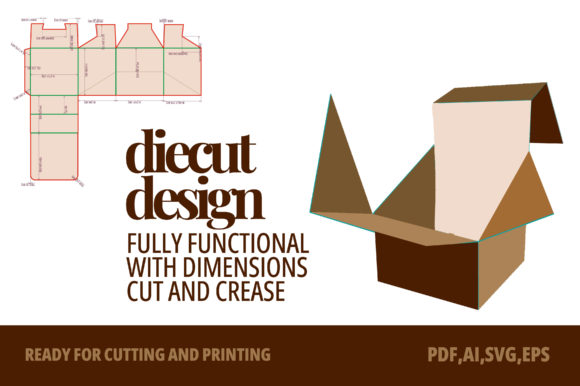
Display Type Box Die Cut Die Line Graphics and Crafts Review
As a digital product creator who has spent years refining listings on Etsy and Creative Fabrica, I approach every new asset with a mix of excitement and skepticism. The market is saturated, and the difference between a listing that converts and one that gathers dust often comes down to presentation and utility. Recently, I came across the Display Type Box Die Cut Die Line, a graphic design asset marketed specifically for packaging design and commercial product creation. My goal was simple: determine if this Snap Lock die line could genuinely elevate my existing product lines or if it would just add clutter to my design folder.
First Impressions and Visual Personality
When you first download a die line, you are looking at structure, not soul. However, the quality of the underlying vector work speaks volumes about the designer’s intent. This particular asset feels sturdy and professional. It isn’t overly ornate or fussy; instead, it offers a clean, modern silhouette that suggests reliability. For sellers in the Crafts and Graphics niches, this neutrality is actually a strength. It allows your own artwork—whether it’s a whimsical watercolor illustration or a bold typographic quote—to take center stage without fighting against complex background patterns.
The mood here is functional yet polished. It appeals to buyers who value organization and aesthetics equally. Think of the customer buying premium sticker paper, the small business owner launching their first candle line, or the crafter preparing for a holiday pop-up shop. They want packaging that looks like it belongs on a high-end shelf. This die line provides that foundation. It signals that the final product will be well-crafted, which builds immediate trust with your end consumer.
Real-World Application for Digital Sellers
I tested this asset across several potential product categories to see where it fits best. The versatility of the included formats (typically SVG, AI, PDF, and PNG) makes it a powerful tool for various selling avenues.
- Packaging Design Assets: The most obvious use is as a template for clients who need custom packaging. You can offer a "Custom Packaging Design Service" where you apply client branding onto this Snap Lock box structure. It saves hours of technical drafting time.
- Printable Product Bundles: For those selling digital downloads, this can be part of a larger bundle. Imagine a "Small Business Launch Kit" that includes social media graphics, business card templates, and this display box die line. It adds tangible value to the digital download.
- Cricut and Silhouette Projects: If you sell cut files, this is essential. Crafters love ready-to-cut vectors. By ensuring the fold lines and cut lines are distinct, you make the user experience seamless. A happy Cricut user is more likely to leave a five-star review.
- Sublimation and Print-on-Demand: While primarily a structural element, you can create mockups using this box. Place your sublimation designs inside the box view to show how a t-shirt design might look when packaged for retail. This visual storytelling helps customers visualize the end result.
Enhancing Product Presentation and Perceived Value
In the world of online selling, your thumbnail is everything. A flat image of a file rarely sells. You need context. Using this Display Type Box Die Cut Die Line allows you to create stunning product mockups that showcase your other assets. Instead of just showing a PNG of a logo, show the logo printed on the side of this elegant box. This technique elevates the perceived value of your entire brand identity.
Furthermore, consistency is key to building a recognizable shop. If you use similar structural elements across your listings—for example, using the same box style for your "Digital Planner Covers" and your "Sticker Sheets"—you create a cohesive visual hierarchy. Customers subconsciously associate that clean, professional look with quality. When they click through from one listing to another, the familiarity reduces friction and increases the likelihood of a purchase.
Strategic Use Cases for Different Platforms
Different platforms require different approaches. On Etsy, detailed lifestyle images perform best. Use this die line to construct a scene where the box is open, revealing your printable wall art inside. On Creative Fabrica, emphasize the technical ease of use. Highlight that the file is ready for instant cutting. For Shopify stores serving physical goods, this asset ensures your unboxing experience matches the quality of the product itself.
Where to Exercise Caution
No asset is perfect for every scenario. There are specific situations where using this die line requires careful consideration. First, avoid using it for tiny sticker details. The structural integrity of a Snap Lock box doesn't translate well to miniature formats where intricate cut lines might get lost or become difficult to execute physically.
Secondly, be mindful of resolution. If you plan to use this for large-format printing, ensure your source files are high-resolution vectors. Rasterizing these lines too early can lead to jagged edges, which undermines the professional aesthetic you are trying to achieve. Additionally, when designing for dark backgrounds, test your contrast levels. A white die line might disappear against a black background, so always preview your design on multiple colorways before publishing.
Finally, consider the complexity of your target audience. While experienced designers appreciate precise die lines, beginners might find them intimidating. Provide clear instructions or video tutorials alongside your sale to mitigate this risk. Clear communication prevents returns and negative feedback.
Practical Seller Notes for Implementation
Before adding this asset to your inventory or using it in client work, follow these practical steps to ensure success:
- Test on Real Mockups: Don't rely solely on digital previews. Print a prototype if possible. Check how the Snap Lock mechanism holds up under stress.
- Verify Transparency: Ensure your PNG exports have true transparency. Ghosting around the edges can make even the best design look amateurish.
- Organize Files Clearly: When selling this as a digital product, organize your folders logically. Separate the cut lines from the fold lines. Label them clearly (e.g., "Cut_Lines", "Fold_Lines", "Glue_Flaps"). This attention to detail sets you apart from competitors who send messy zip files.
- Pair with Complementary Fonts: To demonstrate the asset's potential, pair it with strong serif fonts for elegance or bold sans-serifs for modern appeal. Show buyers how typography interacts with the box structure.
- Confirm Commercial Licensing: Always read the fine print. Does the license allow you to sell finished products made with this die line? Most do, but some restrict resale of the raw file itself. Clarify this in your product description to protect your business.
Final Verdict
The Display Type Box Die Cut Die Line is a solid addition to any digital creator’s toolkit. It bridges the gap between abstract design and tangible product. Whether you are helping a friend launch a handmade business or creating your own line of premium digital planners, this asset provides the structural backbone needed to present your work professionally. It is not just a graphic; it is a tool for business growth. By integrating this into your workflow, you signal to your customers that you care about the details, both in your digital creations and in how they are presented to the world. For serious sellers in the Crafts and Graphics sectors, the investment in such versatile, high-quality assets pays off in increased sales and stronger brand reputation.